
Feature
Violation Case Management
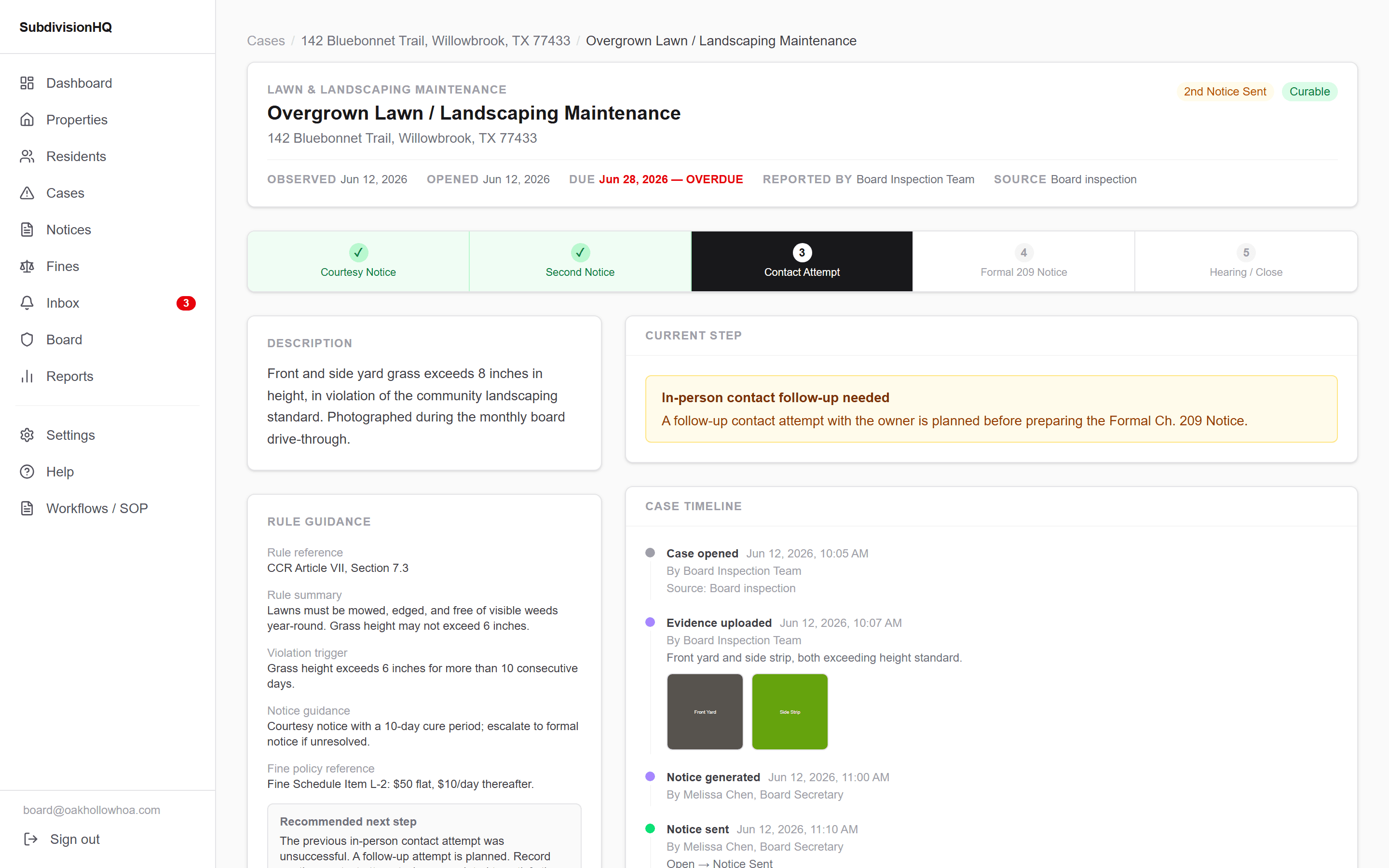
Every violation is a case, not a note — observation, evidence, notices, and resolution in one record.
Violation history gets scattered across inboxes and notebooks
When cases live in email threads, text messages, and a board member's personal notes, nobody has one place to check where a case actually stands, what's already been sent, or what happens next.
One case file per violation, from observation to close
SubdivisionHQ tracks each violation as a case containing photo evidence, timestamps, rule citations, and every notice sent — so any board member can open a case and immediately understand its full history.
How it works
- 1
Log the observation
Record the violation with photo evidence, the property, and the governing document rule it relates to.
- 2
Track notices and cure periods
Courtesy and follow-up notices are tied to the case, each with its own sent date and delivery method.
- 3
Follow up automatically stays visible
Open cases surface on the board dashboard until they're resolved or escalated.
- 4
Close with a documented resolution
Every case ends with a recorded resolution or expungement, preserving the full history.
Why it matters
- A single source of truth for every open and closed case
- Photo evidence and rule citations attached directly to the case
- Nothing depends on one board member's memory or personal files
- A defensible, dated record if a case is ever challenged
Frequently Asked Questions
- Can a property have more than one open violation case at a time?
- Yes. Properties can have multiple simultaneous open cases — SubdivisionHQ doesn't limit enforcement to one active case per property.
- Does SubdivisionHQ decide whether a violation occurred?
- No. The board makes all enforcement decisions. SubdivisionHQ organizes the evidence, notices, and history so those decisions are easy to document and defend later.
Related Features
Related Solutions
Related Resources
How HOA Violation Notices Should Be Documented
A notice that isn't documented is a notice you can't prove you sent. Here's what a defensible record actually looks like.
Learn moreHow to Build a Defensible HOA Compliance Record
A defensible compliance record isn't built in the moment a case is challenged — it's built one documented case at a time, well before that.
Learn moreSee Violation Management in your own community
We'll walk through how it fits your board's current process.
Request a Demo